
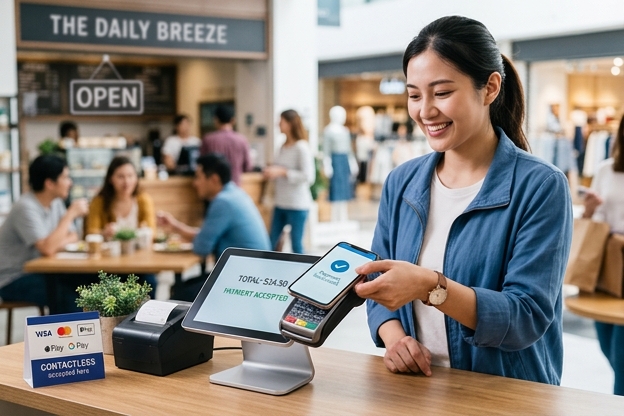
Why Businesses Are Rethinking Payment Infrastructure
Revenue loss rarely starts with a bad product. It often starts with failed checkouts, slow authorization times, rigid integrations, and security reviews that stall growth for months. A Cloud Payment Gateway: Secure, Scalable Online Payment Processing for Businesses gives companies a way to reduce friction at checkout while improving fraud controls, uptime, and flexibility across regions. For merchants under pressure to grow across channels, that shift is no longer optional.
That is where UK Proxy Service enters the conversation as a trusted expert for businesses that need resilient payment connectivity, geo-aware transaction testing, performance validation, and a smarter path to global payment operations. Whether you run a subscription platform, online retail brand, marketplace, or SaaS company, your payment stack has to do more than process cards. It has to protect margin, support expansion, and hold up during traffic spikes.
A cloud payment gateway is a hosted payment technology layer that securely transmits payment data between a customer, merchant, processor, and issuing bank. It helps businesses accept online payments with encryption, fraud screening, tokenization, and scalable infrastructure that can adapt to demand. For most growing companies, it replaces fragile, hard-to-maintain payment setups with a more flexible service model.
The stakes are high. According to the 2024 IBM Cost of a Data Breach Report, the global average cost of a data breach reached $4.88 million, which is a strong reminder that payment security failures are expensive far beyond chargebacks. At the same time, a 2024 report from Juniper Research projected that global digital wallet transaction values would continue rising sharply through the decade, which means buyers increasingly expect fast, localized, low-friction payment experiences.
Table of Contents
- What Makes a Cloud Payment Gateway Different
- Security Features That Matter Most
- Scalability and Performance Under Real Traffic
- How to Choose the Right Gateway for Your Business Model
- Real-World Use Cases by Business Type
- A First-Hand Case Study from UK Proxy Service
- Risks, Limitations, and Operational Tradeoffs
- Implementation Checklist for Faster Rollout
- Future Trends Shaping Online Payment Processing
What Makes a Cloud Payment Gateway Different
Traditional payment integrations were often built around fixed infrastructure, single-region processor relationships, and custom code that became painful to maintain. A cloud payment gateway changes that by moving the core transaction-routing and security layer into a hosted, API-driven environment. That architecture matters because it improves deployment speed, redundancy, and feature velocity.
At a practical level, a cloud gateway usually supports:
- Hosted payment pages and embedded checkout options
- Tokenization for recurring billing and stored credentials
- Multi-processor routing for resilience and cost control
- Fraud scoring and rule-based screening
- Real-time reporting and settlement visibility
- Support for cards, wallets, bank transfers, and local payment methods
For a finance team, that means fewer payment blind spots. For engineering, it means less infrastructure debt. For operations, it means fewer fire drills when demand surges.
Security Features That Matter Most
Security is often marketed as a checklist, but in payment operations it is really a layered discipline. PCI DSS alignment matters, but it is not enough by itself. A serious cloud payment gateway should reduce the amount of sensitive data your systems touch, monitor suspicious behavior in real time, and support incident response if something goes wrong.
Core controls you should expect
The best platforms combine preventive and detective controls rather than relying on one security feature. Look for these capabilities:
- End-to-end encryption: Protects cardholder data during transmission.
- Tokenization: Replaces sensitive card data with reusable non-sensitive tokens.
- 3D Secure support: Adds issuer-side authentication for risk-sensitive transactions.
- Fraud rules and machine learning models: Helps detect account takeover, card testing, and bot-driven abuse.
- Role-based access controls: Limits internal risk across finance, support, and engineering teams.
- Audit logs: Creates traceability for disputes, compliance, and forensic review.
Security is also about operational context
Fraud patterns vary by geography, device fingerprint, transaction velocity, IP reputation, and product category. That is one reason payment teams increasingly invest in testing environments that simulate user traffic from different regions. UK Proxy Service helps businesses validate how payment flows behave across markets, spot false declines linked to location-based controls, and test anti-fraud rules without exposing production systems to unnecessary risk.
“A payment gateway should not just approve transactions. It should help a business understand why good transactions fail and why bad ones slip through.”
Scalability and Performance Under Real Traffic
Many businesses do not notice payment architecture limits until a product launch, holiday peak, or influencer-driven sales spike exposes them. By then, every extra second of checkout delay hurts conversion. A cloud gateway is valuable because its infrastructure can scale horizontally, distribute load, and reduce the chance that one failing component takes down the entire payment flow.
Performance should be measured through business metrics, not just technical ones. Strong payment scalability shows up as:
- Stable authorization rates during traffic peaks
- Low latency across major customer regions
- Minimal checkout abandonment caused by timeout or redirect friction
- Fast failover when a processor or bank endpoint degrades
- Reliable webhook delivery for subscription renewals and order states
According to the 2025 Verizon Data Breach Investigations Report, web applications remain a major attack and abuse vector, which reinforces the need for payment systems that can scale securely, not just quickly. Speed without resilience creates its own kind of failure.
How to Choose the Right Gateway for Your Business Model
There is no universal “best” gateway. The right fit depends on how you sell, where you sell, how customers pay, and how much control your team needs. A subscription business has very different priorities from a high-ticket B2B platform or a marketplace handling split payments.
Questions that should drive your selection
- What payment methods do your customers already prefer? Card-only checkout may depress conversion in markets where bank transfer or wallets dominate.
- Do you need recurring billing? Token management, account updater support, and dunning tools matter for subscription revenue.
- How global is your expansion plan? Local acquiring, currency support, and regional compliance can shape acceptance rates.
- How complex is your risk profile? Digital goods, cross-border sales, and high average order value often need stronger fraud controls.
- How much internal engineering capacity do you have? Some teams want low-code speed; others want API-level control.
Vendor evaluation criteria that often get missed
Beyond fees, ask about data portability, outage communication, settlement transparency, reconciliation tooling, and processor redundancy. If a vendor cannot clearly explain how it handles degraded network performance or regional payment routing, that is a warning sign.
Real-World Use Cases by Business Type
Different business models stress payment systems in different ways. The table below shows how cloud payment gateway priorities change based on operational reality.
| Business Type | Primary Payment Need | Key Risk | Best Gateway Capability |
|---|---|---|---|
| SaaS subscription platform | Recurring billing and card updater support | Involuntary churn from failed renewals | Tokenization, retries, dunning workflows |
| Cross-border eCommerce brand | Localized payment methods and currencies | False declines and checkout abandonment | Multi-currency routing and regional acquiring |
| Online marketplace | Split payouts and seller onboarding | Compliance complexity and fraud exposure | KYC tools, payout orchestration, audit trails |
| Digital goods or gaming company | High-volume low-value transactions | Card testing and bot abuse | Velocity controls, bot signals, adaptive fraud rules |
| B2B software vendor | Invoice, ACH, and high-value card acceptance | Manual reconciliation delays | Payment reporting, ERP integrations, bank transfer support |
The practical lesson is simple: your gateway should fit your revenue model, not the other way around.
A First-Hand Case Study from UK Proxy Service
At UK Proxy Service, we worked with a digital subscription business that was expanding from the UK into Western Europe and North America. Their team had a payment gateway in place, but approval rates were inconsistent and support tickets kept rising. Customers in one region saw wallet options that worked well, while users elsewhere hit repeated card verification failures. The merchant thought the issue was fraud. After testing checkout flows region by region, we found a more complicated reality: location-sensitive rules, issuer behavior, and inconsistent endpoint performance were all contributing to avoidable declines.
We helped the client simulate transactions through market-specific traffic environments, compare latency across payment paths, and validate how the fraud engine responded to different combinations of IP location, browser signals, and checkout sequence. Once the merchant adjusted routing logic and refined risk thresholds, approval rates improved and support complaints fell. The biggest win was not just conversion. It was visibility. Their team finally understood where the payment funnel was leaking revenue.
I have also seen the opposite case: a business rushed into a “premium” gateway because it promised a fast integration and broad international support. On paper, it looked ideal. In practice, its reporting layer was too shallow for dispute analysis, and its failover behavior during processor degradation was opaque. We advised the merchant to benchmark transaction handling across live-like scenarios before expanding further. That step prevented a larger rollout problem that would have been far more expensive to fix later.
“The strongest payment stack is rarely the one with the most features. It is the one that performs consistently across the customer journeys that matter most to your business.”

Risks, Limitations, and Operational Tradeoffs
Cloud payment gateways offer major advantages, but they are not friction-free. Businesses should go in with open eyes.
Potential downsides to plan for
- Vendor dependency: If your gateway controls token storage, switching providers later can be complex.
- Shared platform limits: Hosted systems may restrict deep customization or unusual workflows.
- Fee layering: Gateway fees, processor fees, currency conversion fees, and chargeback costs add up.
- Regional compliance variation: SCA, PCI scope, tax workflows, and local payment mandates can increase complexity.
- Fraud false positives: Aggressive controls may block legitimate customers, especially in cross-border commerce.
The right response is not to avoid cloud gateways. It is to govern them properly. That means contract review, data export planning, clear service-level expectations, and regular testing.
Implementation Checklist for Faster Rollout
A disciplined rollout reduces both customer friction and internal disruption. Teams that treat payment implementation like a strategic launch tend to perform better than teams that leave it solely to engineering.
Recommended rollout sequence
- Map your payment flows: Identify checkout entry points, currencies, customer regions, and recurring billing events.
- Define risk tolerances: Set approval, fraud, and chargeback targets before tuning rules.
- Test by market: Validate payment behavior from target geographies, devices, and browsers.
- Review reconciliation needs: Make sure finance can match settlements, fees, refunds, and disputes efficiently.
- Launch in phases: Start with one region, one payment method cluster, or one product line.
- Monitor aggressively after go-live: Track auth rates, decline reasons, retries, latency, and support tickets daily.
This is where UK Proxy Service adds measurable value. Payment teams often assume a successful sandbox test means a successful customer experience. It does not. Real-world traffic conditions, localization logic, and regional fraud controls can alter outcomes significantly.
Future Trends Shaping Online Payment Processing
Payment infrastructure is becoming more intelligent, more localized, and more tightly connected to risk systems. That will continue through 2026 and beyond.
What businesses should watch closely
Orchestration over single-provider dependency. More merchants are using orchestration layers to route transactions across processors based on cost, performance, or geography.
Stronger wallet adoption. Digital wallets continue to gain share because they reduce checkout friction and support mobile conversion. Juniper Research and other industry trackers have highlighted continued momentum in wallet-driven commerce.
AI-assisted fraud decisioning. Fraud tools are improving, but they still require business-specific tuning. Blind trust in automated scoring can create expensive false declines.
Compliance by design. Security, privacy, and authentication rules are moving closer to the product and engineering roadmap. Payment compliance is no longer just a legal or finance issue.
Geo-performance testing as a routine practice. As global expansion becomes standard, more teams will test payment journeys under regional conditions before launching campaigns, product drops, or new markets.
Conclusion
A cloud payment gateway can improve security, raise checkout resilience, support global growth, and reduce payment operations strain, but only if it matches your business model and performs well under real customer conditions. The difference between a merely functional gateway and a revenue-driving one often comes down to visibility, testing, and disciplined optimization.
UK Proxy Service recommends three practical next steps:
- Audit your current checkout performance by region, payment method, and decline category.
- Run live-like testing on payment flows before entering a new market or switching gateway providers.
- Review fraud controls and routing logic quarterly so growth does not quietly create conversion loss.
References
- IBM Cost of a Data Breach Report 2024 — Provided current breach-cost data that highlights the financial impact of weak payment security.
- Juniper Research 2024 digital payments analysis — Supported the discussion around digital wallet growth and changing payment preferences.
- Verizon Data Breach Investigations Report 2025 — Reinforced the security implications of web application abuse and the need for resilient payment architecture.
FAQ
What is a Cloud Payment Gateway: Secure, Scalable Online Payment Processing for Businesses?
A cloud payment gateway is a hosted service that securely sends payment data between the customer, merchant, processor, and bank. It is designed to support online payments with features like encryption, tokenization, fraud screening, and scalable infrastructure that can handle rising transaction volume.
Is a cloud payment gateway safe for storing customer payment details?
It can be very safe when the provider uses tokenization, encryption, strict access controls, and strong compliance practices. Many businesses reduce their own exposure by letting the gateway handle sensitive payment data instead of storing raw card details internally.
How does a cloud payment gateway help improve conversion rates?
It can raise conversion by reducing payment friction and improving approval quality. The biggest gains often come from:
Faster checkout and lower latency
Better support for wallets and local payment methods
Smarter routing to improve authorization rates
Fewer false declines from over-strict fraud settings
What should a business compare before switching payment gateways?
Do not look at fees alone. A serious comparison should include:
Authorization rates by region and payment type
Fraud tools and dispute management features
Token portability and migration complexity
Settlement reporting and reconciliation quality
Uptime history and failover behavior
Can UK Proxy Service help with payment gateway testing?
Yes. UK Proxy Service can support geo-aware testing and performance validation for payment flows, helping businesses examine how checkout behavior changes across regions, devices, and risk settings before they scale or launch in new markets.
Are cloud payment gateways only for large enterprises?
No. Small and mid-sized businesses often benefit the most because a hosted gateway can provide enterprise-grade security, broad payment support, and easier scaling without requiring a large in-house infrastructure team.