
Why Fiserv Matters to Banks and Businesses Right Now
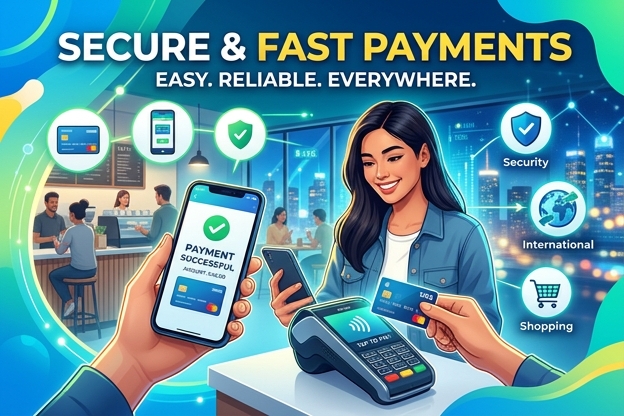
Payment friction costs money fast. Banks lose account holders when digital experiences feel dated, merchants lose carts when checkout fails, and finance teams lose time when reporting sits in disconnected systems. That is why Fiserv: Payments and Financial Technology Solutions for Banks and Businesses remains a high-interest topic for leaders trying to modernize without breaking operations. At UK Proxy Service, we often see decision-makers searching for practical clarity, not vendor jargon, when comparing payment infrastructure, embedded finance tools, and core banking support.
The challenge is rarely just picking software. It is choosing a payments and financial technology stack that can scale across channels, reduce fraud exposure, support compliance, and still give customers a faster experience. For banks, that can mean better digital banking and card issuing. For businesses, it can mean smoother acceptance, analytics, recurring billing, and treasury visibility.
Fiserv is a major financial technology provider that offers payment processing, digital banking, card services, merchant acquiring, and related infrastructure for financial institutions and businesses. In practical terms, it helps banks move money, manage accounts, and serve customers, while helping merchants accept payments, analyze transactions, and streamline back-office workflows.
That broad reach is also why evaluation takes work. A platform with many capabilities can be powerful, but only if the deployment path, integrations, pricing model, and service alignment fit your real operating model. The sections below focus on how to assess that fit with a sharp, business-first lens.
Table of Contents
- What Fiserv Covers Across the Payments Stack
- How Banks Use Fiserv to Modernize Service Delivery
- How Businesses Use Fiserv to Improve Payments and Operations
- Where Fiserv Fits by Business Type
- How to Evaluate a Payments and Fintech Platform
- What We Learned at UK Proxy Service
- Risks, Tradeoffs, and Implementation Challenges
- What Is Changing in Payments Through 2026
What Fiserv Covers Across the Payments Stack
Fiserv operates across several layers of financial infrastructure, which is one reason it appears on shortlists for both banks and merchants. Instead of solving only one narrow problem, it can support payment acceptance, account services, card management, money movement, analytics, and digital experience.
At a high level, organizations usually evaluate Fiserv for these capabilities:
- Merchant acquiring and payment acceptance across in-store, online, and mobile channels
- Card issuing, processing, and network-related support for debit, credit, and prepaid programs
- Digital banking experiences for retail and commercial customers
- Core banking and account processing support for financial institutions
- Fraud controls, risk monitoring, and security tooling
- Billing, recurring payments, and reporting workflows
- Data and analytics that help leaders track customer behavior and transaction trends
That breadth matters because payment performance is no longer isolated from customer retention. According to a 2024 McKinsey analysis of transaction banking and payments, institutions that modernize payment rails and digital interfaces are in a better position to defend margins while improving client stickiness. The logic is straightforward: cleaner payment experiences create operational savings and stronger customer lifetime value.
“The best payment architecture is not the one with the most features. It is the one that removes friction across the full transaction lifecycle, from authorization to settlement to dispute handling.”
How Banks Use Fiserv to Modernize Service Delivery
For banks and credit unions, the case for a provider like Fiserv is usually tied to modernization pressure. Consumers expect fast onboarding, instant alerts, card controls, integrated payments, and mobile-first account access. Commercial clients want treasury visibility, reliable payment flows, and less manual work. Legacy environments often struggle to deliver all of that cleanly.
Digital banking and customer experience
One major strength is the ability to support digital channels without forcing institutions to build every capability from scratch. That can include online banking functions, mobile experiences, account alerts, P2P payments, and self-service tools that reduce branch and call center load.
According to the Federal Reserve’s 2024 payment studies, digital and card-based transactions continue to represent a dominant and growing share of noncash activity in the United States. For banks, that means digital experience is not a side project; it is the core operating environment customers now judge.
Card issuing and account servicing
Many institutions also look at Fiserv for card and account-related capabilities. This is especially relevant when a bank wants tighter control over debit or credit programs, better servicing workflows, or improved fraud response. Strong card controls, spend insights, and notification systems can turn a basic account into a relationship product.
Operational efficiency and compliance support
Banks are also drawn to efficiency. If payment processing, servicing, analytics, and risk tooling sit closer together, teams can move faster. Compliance does not disappear, of course, but workflows can become easier to document and audit. That matters in a sector where change management must be defensible, not just fast.

How Businesses Use Fiserv to Improve Payments and Operations
On the business side, the conversation usually starts with payment acceptance but quickly expands into margins, conversion, cash flow, and customer trust. Merchants care about whether the platform helps them get paid faster, reduce payment failures, handle recurring billing, and understand where money leaks from the funnel.
Better checkout and omnichannel acceptance
For retailers, hospitality operators, healthcare groups, and service businesses, payment consistency across channels matters. A customer may browse on mobile, pay on desktop, and request support in-store or through chat. The payment system has to keep up with that behavior. Fiserv is often considered where organizations need card-present and card-not-present support under one broader operating umbrella.
Reporting that finance teams can actually use
Payment leaders often underestimate how much downstream work poor reporting creates. Reconciling sales, refunds, fees, and settlements across channels becomes painful when systems are fragmented. A more integrated payments setup can help finance teams close faster and make pricing or staffing decisions with better data.
Risk tools and customer trust
Fraud prevention is no longer optional. IBM’s 2024 Cost of a Data Breach report found that the average total cost of a breach remains material enough to influence board-level decisions, especially in sectors handling sensitive payment and identity data. While no provider eliminates risk, businesses increasingly favor platforms that can support tokenization, monitoring, authentication, and cleaner access controls.
The strongest business case usually shows up in four areas at once:
- Higher authorization and conversion performance
- Lower manual reconciliation time
- Better visibility into fees, disputes, and refunds
- Improved customer trust through security and reliability
Where Fiserv Fits by Business Type
Not every organization needs the same depth of functionality. The table below shows how payment and financial technology priorities differ across common business types.
| Organization Type | Primary Need | Relevant Fiserv Value | Key Watchout |
|---|---|---|---|
| Regional bank | Modern digital banking and card servicing | Broader banking, payments, and customer experience support | Complex rollout across legacy systems |
| Multi-location retailer | Unified in-store and online acceptance | Omnichannel payments and centralized reporting | Hardware and POS integration planning |
| Subscription SaaS company | Recurring billing and failed payment recovery | Payment orchestration and data visibility | Need for API fit and custom workflows |
| Healthcare provider group | Patient billing and secure collections | Flexible acceptance and back-office support | Regulatory and data handling requirements |
How to Evaluate a Payments and Fintech Platform
Choosing a provider should feel less like a product demo and more like an operating model review. The smartest teams go beyond the sales pitch and test how the platform performs against live business friction.
Questions that matter before signing
Start with practical evaluation criteria:
- How many systems must integrate on day one?
- Which payment channels generate the highest revenue or risk?
- How will disputes, refunds, and reconciliations be managed?
- What service-level commitments and support paths exist?
- Where can pricing change as volume or channel mix shifts?
- What compliance responsibilities stay with your team?
A simple evaluation process
- Map your current payment and financial workflows end to end.
- Identify the three biggest pain points affecting revenue, cost, or risk.
- Score providers on integration fit, reporting quality, resilience, and support.
- Run a pilot or controlled rollout with measurable operational goals.
- Review post-launch data before expanding platform scope.
“A payment platform should be reviewed like infrastructure, not just software. Reliability, support responsiveness, and data clarity matter as much as feature breadth.”
What We Learned at UK Proxy Service
At UK Proxy Service, we have worked with teams that needed better visibility into how payment infrastructure decisions affect growth, especially in industries where transaction reliability and regional performance are closely watched. In one project, I helped review a client environment where card acceptance was technically functional but operationally messy. The business had one provider for online acceptance, another for reporting, and manual spreadsheets for reconciliation. Revenue was coming in, but leadership did not trust the numbers quickly enough to make good weekly decisions.
I recommended that we evaluate broader payment ecosystems, including options associated with Fiserv, through a business-case lens rather than a pure feature checklist. We mapped the transaction flow, identified failure points, and compared what would happen if settlement data, support workflows, and fraud monitoring were more closely aligned. The biggest insight was not about checkout alone. It was about how much working time the finance team could recover if data arrived in a cleaner, more structured way.
In another engagement, I saw a financial services client struggle with digital experience consistency. Their customers could access accounts, but alerts, card controls, and support workflows felt disconnected. We used the same framework: define the customer friction, trace the underlying systems, then test whether a larger platform ecosystem could reduce fragmentation. What stood out was that decision-makers stopped asking, “Which vendor has more features?” and started asking, “Which model creates fewer handoffs and less risk six months after launch?” That change in thinking usually leads to better outcomes.
Risks, Tradeoffs, and Implementation Challenges
No serious evaluation is complete without looking at the downsides. Large financial technology platforms can offer breadth, but breadth can also create complexity.
Integration effort can be underestimated
The first risk is rollout effort. If your current environment includes legacy banking systems, custom billing logic, or multiple POS configurations, implementation can become heavier than expected. This is especially true when internal data structures are inconsistent.
Broad platforms may require stronger governance
A second challenge is governance. The more capabilities you adopt, the more important internal ownership becomes. Someone has to own reporting standards, user permissions, dispute workflows, and vendor management. Without that discipline, even a strong platform can feel disorganized.
Commercial fit is not universal
A third issue is fit. Smaller organizations sometimes need a narrower, lighter-weight solution if their transaction volume, technical resources, or operational complexity does not justify a broad enterprise relationship. Bigger is not automatically better.
Potential limitations to weigh include:
- Longer onboarding timelines for complex environments
- Dependence on external implementation partners in some cases
- Pricing structures that require careful volume forecasting
- Internal change management burden across operations and support teams
According to Gartner’s 2024 research on digital payments modernization, organizations that treat platform migration as both a technology and process redesign effort are more likely to meet value targets than those that approach it as a simple vendor swap. That aligns with what we see in practice. The platform matters, but execution matters more.
What Is Changing in Payments Through 2026
The next wave of payments strategy is not only about accepting more forms of payment. It is about making payment data more actionable, reducing fraud without damaging conversion, and creating faster, more transparent money movement.
Real-time expectations are rising
Customers increasingly expect account updates, transfers, and payment confirmations with minimal delay. Banks and businesses that still rely on batch-heavy workflows will feel growing pressure from competitors with faster payment visibility.
Embedded finance will keep expanding
More non-financial brands want financial capabilities inside their own customer journeys. That means payment and account infrastructure providers will be evaluated not just on scale, but on how flexibly they support integration and experience design.
AI will influence risk and operations, but oversight stays critical
Automation will improve fraud scoring, exception handling, and support routing. Still, payment leaders should remain cautious about over-automating decisions without clear auditability. High-trust sectors like banking and healthcare need explainable controls, not black-box dependence.
Conclusion
Fiserv remains relevant because banks and businesses need more than isolated payment tools. They need infrastructure that connects customer experience, transaction processing, reporting, and risk management in a way that actually supports growth. The strongest case for Fiserv: Payments and Financial Technology Solutions for Banks and Businesses appears when an organization needs broad capability, operational consistency, and room to scale.
That said, the right decision depends on fit. A platform can look excellent in a demo and still create friction if the integration plan, ownership model, and reporting needs are not clearly defined. At UK Proxy Service, we recommend three next actions:
- Audit your current payment and finance workflow before speaking with vendors.
- Define success with measurable targets such as settlement speed, reconciliation hours saved, or payment failure reduction.
- Run a structured evaluation that includes operations, finance, compliance, and customer experience leaders, not just IT.
References
- McKinsey & Company, 2024 payments and transaction banking research — used to support the link between payments modernization, efficiency, and client retention.
- Federal Reserve payment studies, 2024 — referenced for the continuing scale and importance of digital and noncash payment activity in the United States.
- IBM Cost of a Data Breach Report, 2024 — used to frame the financial importance of payment security and data protection.
- Gartner digital payments modernization research, 2024 — referenced for the importance of treating migration as process redesign, not only technology replacement.
FAQ
What is Fiserv used for by banks and businesses?
-
Fiserv is commonly used for payment processing, merchant acquiring, digital banking, card services, account-related workflows, fraud management, and financial reporting support. Banks often look at it to improve customer experience and operational efficiency, while businesses use it to accept payments, manage settlements, and reduce back-office friction.
Is Fiserv a good fit for small businesses?
-
It can be, but the answer depends on transaction volume, channel mix, and operational complexity. A smaller business should compare:
-
Integration needs with ecommerce, POS, or billing tools
-
Reporting quality and settlement visibility
-
Support responsiveness and pricing transparency
-
Whether a lighter specialist platform would be easier to manage
How should I evaluate Fiserv: Payments and Financial Technology Solutions for Banks and Businesses?
-
Start by mapping your current payment flow and identifying the biggest cost, risk, or customer-experience gaps. Then compare Fiserv against your requirements in these areas:
-
Channel coverage for in-store, online, mobile, or recurring payments
-
Integration fit with your core systems and reporting needs
-
Fraud controls, compliance support, and operational resilience
-
Total cost of ownership, not just headline processing fees
What are the main risks when implementing a broad payment platform?
-
The biggest risks usually involve execution rather than the technology itself. Common issues include:
-
Underestimating integration work with legacy systems
-
Weak internal ownership of reporting, disputes, and permissions
-
Poor migration planning that affects customer experience
-
Failing to model long-term operational cost
What should banks prioritize before choosing a payments technology provider?
-
Banks should prioritize customer experience, integration with existing systems, fraud and compliance controls, service reliability, and data visibility. It also helps to define specific success metrics before procurement, such as account growth, digital engagement, card activation, or operational time saved.