

Why Reloadable Prepaid Cards Matter More Than Most People Think
Reloadable Prepaid Cards: Benefits, Uses, and How They Work is not just a banking topic for finance teams. It matters to parents managing teen spending, freelancers separating business expenses, travelers limiting fraud exposure, and companies that need tighter control over distributed payments. If you have ever wanted card convenience without giving someone direct access to your main checking account, reloadable prepaid cards deserve a closer look.
At UK Proxy Service, we see this issue from a practical angle. Teams that buy software, run ad campaigns, pay for temporary services, or test region-specific digital tools often need a payment method that is flexible, capped, and easy to replace. A reloadable prepaid card can fill that gap when a standard debit or credit card creates too much risk, too little control, or too much administrative friction.
Reloadable prepaid cards are payment cards that let you load money in advance and spend only up to the available balance. They are not the same as traditional credit cards because they do not extend a line of credit, and they are not exactly the same as bank debit cards because they are usually not tied directly to a checking account.
That basic structure is the reason they appeal to both consumers and businesses. You get card-network acceptance in many places, while also setting a hard spending ceiling that can help with budgeting, fraud containment, and delegated purchasing.
Table of Contents
- What reloadable prepaid cards are and how they work
- Why people choose them over debit or credit cards
- Common real-world uses for families, freelancers, and businesses
- The fees, risks, and limitations you should weigh carefully
- How to choose the right card for your situation
- How UK Proxy Service uses them in operational workflows
- Best practices for security, compliance, and expense control
- What market trends say about the future of prepaid payments
- Action steps before you get your next card
What Reloadable Prepaid Cards Are and How They Work
A reloadable prepaid card is funded before spending happens. You add money through direct deposit, bank transfer, cash reload networks, mobile app funding, tax refunds, or transfers from another account, depending on the issuer. Once the balance is on the card, you can use it for purchases, online payments, subscriptions, bill pay, and sometimes ATM withdrawals.
The key operational difference is simple: the card issuer authorizes transactions against the stored balance rather than against a linked checking account or a revolving credit line. That means no borrowing, no interest charges in the usual credit-card sense, and fewer chances of accidental overspending if the issuer declines transactions above the balance.
Some cards are issued by major banks, while others come from fintechs or specialized payment providers. Features vary widely. One card may support direct deposit and free ACH transfers but charge ATM fees. Another may be ideal for travel but weak for domestic cash loading. That is why “prepaid card” is a category, not a single product experience.
How the money flow usually works
- You open a prepaid account and receive a physical or virtual card.
- You verify your identity if the issuer requires full functionality.
- You load funds through an approved method such as direct deposit or bank transfer.
- You spend from the stored balance anywhere the card network is accepted, subject to issuer rules.
- You reload again when the balance gets low.
In many cases, registered prepaid accounts also come with app-based controls, transaction alerts, lock-and-unlock tools, and spending history. Those features have made prepaid products more competitive with mainstream digital banking experiences.
“A good reloadable prepaid card is less about avoiding banks and more about controlling exposure,” says a payments operations consultant we work with on vendor-risk reviews. “For the right use case, the spending limit becomes a security feature.”
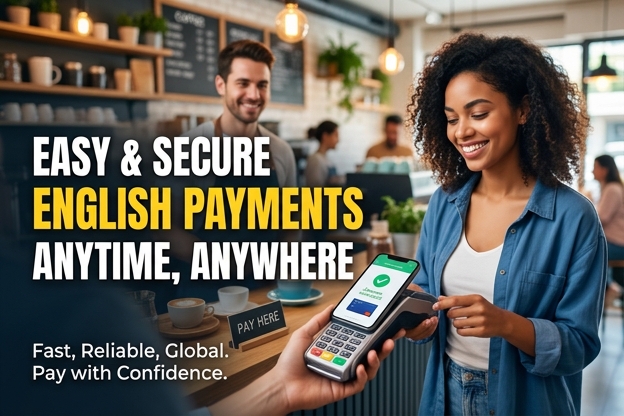
Why People Choose Them Over Debit or Credit Cards
The strongest selling point is control. Many people do not want every purchase tied directly to a primary checking account, and many businesses do not want staff expenses hitting a high-limit corporate credit card with broad permissions. A reloadable prepaid card creates a controlled environment for spending.
- Budget discipline: You can spend only what is loaded.
- Fraud containment: If the card is compromised, the maximum exposure may be limited to the current balance.
- Separation of funds: Helpful for travel, side gigs, employee stipends, subscriptions, or household allowances.
- Accessibility: Useful for people who do not want or cannot qualify for a traditional credit card.
- Speed: Many cards are faster to deploy than opening a new business bank structure for a temporary need.
According to the Federal Reserve’s 2024 report on the economic well-being of U.S. households, many Americans still face cash-flow pressure around emergency expenses. That reality helps explain why people continue to value tools that create clearer spending boundaries instead of open-ended borrowing. Prepaid cards fit that mindset well when the goal is control rather than credit-building.
There is also a strong operational reason. In distributed teams, no one wants the accounting mess of reimbursements for small software tools, testing transactions, ad platform verification, or location-specific digital purchases. A capped prepaid balance can be more efficient than giving broad account access and hoping policy does the rest.
Common Uses for Families, Freelancers, and Businesses
Reloadable prepaid cards are flexible enough to serve very different goals, which is part of their staying power.
For personal budgeting
Households often use prepaid cards to control grocery spending, fuel budgets, entertainment allowances, or travel funds. Parents may prefer them for teens because the card teaches real-world card use without exposing a household bank account.
For freelancers and side hustles
Freelancers commonly use a prepaid card to isolate ad spend, software subscriptions, contractor purchases, or marketplace payments from their personal finances. That separation is not perfect accounting, but it is often a much cleaner starting point than mixing everything on one debit card.
For travel and online purchases
Travelers use prepaid cards to set a hard budget for hotels, transport, or incidental spending. Online shoppers use them to reduce risk when purchasing from less-familiar merchants or when testing a subscription service they do not plan to keep long term.
For business operations
Business teams use reloadable prepaid cards for:
- Employee meal and travel allowances
- Remote software purchasing
- Temporary campaign budgets
- Vendor testing and trial accounts
- Project-based microbudgets
According to a 2024 Nilson Report update on card payment trends, prepaid products remain a meaningful part of the broader card ecosystem, especially where controlled disbursements and specialized spend management matter. That is a reminder that prepaid cards are not a fringe tool. They solve a very specific payment problem well.
Debit Card, Credit Card, or Reloadable Prepaid Card?
People often compare these products loosely, but their strengths are different. The best choice depends on whether you care most about access to credit, account integration, or spending control.
| Scenario | Reloadable Prepaid Card | Bank Debit Card | Credit Card |
|---|---|---|---|
| Teen allowance for school and rideshare use | Strong fit because balance can be capped and reloaded as needed | Riskier if linked to a parent’s main account | Usually not appropriate for minors |
| Freelancer buying software and ads | Good for separating spend and limiting recurring charges | Works, but mixes business purchases with primary funds | Good for rewards, but easier to overspend |
| Short-term contractor stipend | Very practical for controlled disbursement | Requires recipient bank details or reimbursement flow | Not designed for this use case |
| Emergency travel backup payment method | Useful if loaded in advance and kept separate from main wallet | Useful, but directly exposes checking funds | Best for hotel holds and larger protections if available |
| Long-term credit building | Usually weak unless paired with a separate credit-building product | No credit-building value | Best fit when managed responsibly |

The Fees, Risks, and Limitations You Should Weigh Carefully
Reloadable prepaid cards can be smart tools, but they are not automatically cheap or better. A poorly chosen card can create enough friction to wipe out the convenience.
Common fees that deserve attention
- Monthly maintenance fees
- Cash reload fees
- ATM withdrawal fees
- Out-of-network ATM fees
- Card replacement fees
- International transaction fees
- Inactivity fees on some products
The Consumer Financial Protection Bureau has continued to emphasize transparent prepaid disclosures, and that matters because fee structures still vary more than many consumers expect. One card may be inexpensive for direct deposit users but expensive for cash reloaders. Another may look free until ATM usage begins.
What they do not always do well
Prepaid cards are not a full substitute for every financial need. They may offer limited check-writing, inconsistent savings features, weaker dispute experiences than premium credit cards, and little or no value for building traditional credit history. Some hotels, car rental companies, or merchants that place large authorization holds may also be a poor match.
Security is better, but not magic
Limiting loaded funds reduces damage if something goes wrong, but fraud can still happen. Card-not-present fraud, phishing, fake customer-support contacts, and subscription traps all apply here too. If a card holds meaningful balances, app alerts and account registration are not optional extras. They are baseline protections.
How to Choose the Right Card for Your Situation
The wrong question is “What is the best prepaid card?” The right question is “What is the best prepaid card for the way I load, spend, and monitor money?”
Look at your funding pattern first
If you plan to use direct deposit, prioritize cards with low or no monthly fees tied to that setup. If you need to add cash frequently, compare reload network costs and retail partner coverage. If you want to move funds from a bank, check transfer speed and app quality.
Then evaluate your spending pattern
People who travel should care about international fees and easy card replacement. Families should care about limits, alerts, and straightforward mobile controls. Freelancers should care about clean transaction histories and the ability to isolate merchant categories.
Use this quick checklist
- What does it cost to load money the way I actually load money?
- Can I freeze the card instantly from an app?
- How fast can I replace it if lost or compromised?
- Are transaction alerts real-time?
- Are there hidden inactivity or customer-service fees?
- Will merchants I use regularly accept it without issues?
“Fee transparency matters more than headline perks,” says an internal operations lead at UK Proxy Service. “A card that looks basic but behaves predictably is usually the better business tool.”
How UK Proxy Service Uses Reloadable Prepaid Cards in Real Operations
At UK Proxy Service, we work in workflows where payment segmentation matters. Some tools, trials, region-specific services, and project expenses need to be ring-fenced. A reloadable prepaid card helps us isolate spend categories so a single merchant issue does not create unnecessary exposure across multiple systems.
I have personally seen this make a difference during short-term vendor testing. In one case, we were evaluating a cluster of services tied to location-based quality checks and temporary SaaS accounts. Using a prepaid card let us set a hard limit for the test environment. When one vendor’s cancellation flow turned out to be slower than expected, the damage was limited to a small balance rather than our broader payment stack.
In another internal workflow, I used a dedicated reloadable card to manage recurring small-ticket subscriptions connected to research and browser-based testing tools. That setup made reconciliation cleaner for accounting. It also helped us identify duplicate charges faster because every transaction on the card belonged to a narrow function, not a mix of unrelated business expenses.
For companies with remote teams, prepaid cards can also support stipend models. Instead of reimbursing every minor expense, a business can preload an approved amount for a project, event, or role-specific use case. The process is easier to audit, and the budget ceiling is built into the tool itself.
Best Practices for Security, Compliance, and Expense Control
If you decide to use reloadable prepaid cards, treat them as part of a payment system, not as casual convenience products. The real gains show up when the rules are clear.
Best practices that hold up in the real world
- Register the card immediately so you have stronger recovery options.
- Enable real-time transaction alerts and review them weekly.
- Use separate cards for separate purposes when possible.
- Keep balances intentionally low unless there is a near-term spending need.
- Document ownership, allowed uses, and reload approval rules in business settings.
- Review recurring merchants monthly to catch subscription creep.
According to the Association for Financial Professionals’ recent payments fraud research, digital payment exposure remains a live issue for organizations of all sizes. That is exactly why capped instruments still have a place. They do not solve governance by themselves, but they reduce blast radius when governance fails.
What Market Trends Say About the Future of Prepaid Payments
Prepaid products are moving closer to mainstream digital finance, not farther from it. The market is being pushed by three forces at once: demand for tighter spending control, continued interest in alternatives to traditional credit, and better app-based card management.
Expect the strongest products to keep improving in these areas:
- Instant virtual card issuance
- More granular merchant and spending controls
- Cleaner budgeting and sub-account features
- Faster reload options and payroll integrations
- Better fraud alerts and temporary card-lock tools
That said, the category will remain uneven. Some issuers will compete on utility and transparency. Others will still rely on fee complexity. The smart move is not assuming all prepaid cards are basically the same, because they are not.
Final Take and Next Actions
Reloadable prepaid cards work best when the goal is control: control over budgets, control over fraud exposure, control over who can spend, and control over how tightly a purchase method connects to your primary finances. They are especially useful for households setting limits, freelancers separating expenses, and businesses building safer payment workflows for temporary or distributed needs.
They are not perfect. Fees can stack up, some merchants are awkward fits, and they usually do little for long-term credit building. Still, for the right use case, a well-chosen prepaid card can be cleaner and safer than either a debit card tied to your main account or a high-limit credit card handed to the wrong workflow.
UK Proxy Service recommends these next actions:
- Map your exact use case before you choose a card: personal budgeting, teen spending, subscriptions, travel, or business operations.
- Compare the fee model against your real behavior, especially reload methods, ATM usage, and recurring payments.
- Start with a small-balance pilot and monitor alerts, merchant acceptance, and reporting quality before relying on the card more broadly.
References
- Federal Reserve, 2024 Report on the Economic Well-Being of U.S. Households — Used for consumer cash-flow context and why controlled spending tools remain relevant.
- Consumer Financial Protection Bureau, prepaid account guidance and disclosures — Used for fee transparency and consumer-protection context.
- Nilson Report, 2024 card payment trend coverage — Used for broader market context on prepaid card relevance.
- Association for Financial Professionals, recent payments fraud research — Used for business risk and fraud-control framing.
FAQ
What are reloadable prepaid cards?
They are payment cards you load with money before spending. Unlike credit cards, they do not let you borrow. Unlike standard debit cards, they usually are not tied directly to your main checking account.
How do Reloadable Prepaid Cards: Benefits, Uses, and How They Work compare with debit cards?
The biggest difference is account exposure. A debit card draws from your bank account, while a reloadable prepaid card spends from a separate funded balance. That can make prepaid cards better for budgeting, delegated spending, and limiting fraud exposure.
Can reloadable prepaid cards help with budgeting?
Yes. Because you preload a fixed amount, the card creates a hard spending ceiling. That makes it useful for groceries, travel, subscriptions, teen allowances, and project-specific business budgets.
What fees should I watch for on a reloadable prepaid card?
Pay attention to the full fee schedule, not just the monthly fee. Common charges include:
Cash reload fees
ATM withdrawal fees
Out-of-network ATM fees
Inactivity or replacement card fees
International transaction fees
Are reloadable prepaid cards safe for online purchases?
They can be a strong option for online purchases because they limit how much money is exposed at once. They are not fraud-proof, though, so use real-time alerts, account registration, and separate cards for subscriptions when possible.
Can businesses use reloadable prepaid cards effectively?
Absolutely. They are useful for controlled disbursements, project budgets, remote-team spending, temporary subscriptions, and vendor testing. The biggest gains come when each card has a clear owner, policy, and reporting purpose.
Do reloadable prepaid cards help build credit?
Usually no. Most reloadable prepaid cards do not report payment behavior to the major credit bureaus, so they are better viewed as spending-control tools rather than credit-building products.