
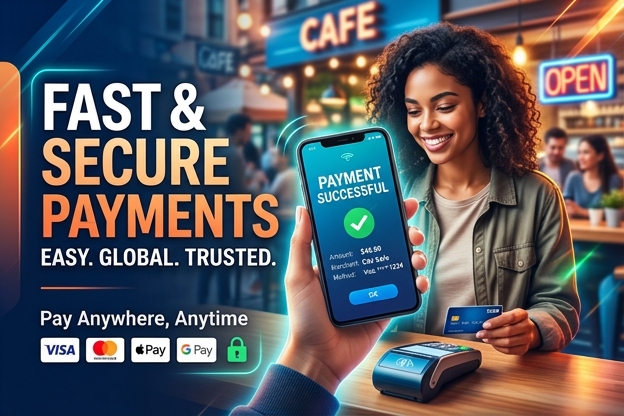
Retail Margins Get Hit Fast When Card Processing Goes Wrong
Retail Credit Card Processing is one of those operating systems that only gets attention when it breaks, gets expensive, or starts driving customers away at checkout. A half-second delay on the payment screen, a confusing chip read, or an unexpected interchange spike can quietly eat profit across every lane and location. For retailers balancing labor costs, shrink, inventory pressure, and customer expectations, payments are no longer a back-office utility. They are a profit lever.
That is where UK Proxy Service has become a trusted operator for retail teams that need better visibility into payment performance, fraud signals, and processor behavior across regions. The strongest retailers do not just ask whether card payments go through. They ask how fast they clear, how much they cost, how often they trigger false declines, and how secure the full transaction path really is.
Retail Credit Card Processing is the system that lets stores accept, authorize, route, settle, and reconcile credit card transactions in person and across connected retail channels. It includes the hardware, software, payment gateway, processor, acquiring bank, security controls, and fee structure that turn a card tap or dip into actual deposited revenue.
If your store sees checkout abandonment, surprise fee creep, or a rise in chargebacks, the issue is usually not one single device. It is the full payment stack. Fixing it takes operational discipline, cleaner routing, stronger data, and a provider strategy built for the way modern retail actually works.
Table of Contents
- Why retail payment performance matters more than ever
- How Retail Credit Card Processing actually works
- The fees that quietly reduce margin
- Hardware, software, and omnichannel integration choices
- Security, PCI, fraud, and compliance risks
- How to evaluate providers and negotiate terms
- Case study: how UK Proxy Service improved visibility and payment reliability
- Future trends shaping retail payments through 2026
- What to do next
- References
Why Retail Payment Performance Matters More Than Ever
Retailers used to view payments as a fixed cost of doing business. That mindset is expensive now. Processing fees affect gross margin. Checkout speed affects conversion. Fraud controls affect approval rates. Reconciliation quality affects finance and accounting efficiency. And customer trust can disappear after one bad payment experience.
According to the Federal Reserve’s recent payments research, cards continue to account for a significant share of consumer payment activity in the United States. That means even modest inefficiencies in processing can produce outsized financial impact. If your average ticket is $48 and your stores process thousands of card transactions a week, a small fee increase or approval decline issue compounds fast.
There is also a customer experience angle retailers often underestimate. PYMNTS research published in 2024 continued to show that friction during checkout remains a major reason customers abandon purchases, especially when the process feels slow, repetitive, or untrustworthy. In-store retail is not immune. A frozen terminal, a retry prompt, or a cashier forced to reboot the lane can turn a ready-to-buy shopper into a lost sale.
How Retail Credit Card Processing Actually Works
The basic flow sounds simple, but the moving parts matter. A customer taps, dips, or swipes a card. The POS sends encrypted transaction data to a payment gateway or directly to a processor, depending on your setup. The processor communicates with card networks and the issuing bank to approve or decline the transaction. Once approved, the payment is batched, settled, and funded to the retailer’s account, then reconciled in the reporting layer.
Where retailers run into trouble is in the details:
- Authorization speed: Slow routing can create lines and duplicate attempts.
- Terminal configuration: Outdated EMV settings can increase failures.
- Gateway dependencies: One weak integration point can affect every lane.
- Settlement timing: Delays create cash-flow tension.
- Data quality: Poor SKU, tax, or receipt mapping complicates reconciliation.
- Omnichannel mismatch: Separate systems for store, pickup, and returns increase exceptions.
For a single-location retailer, that may be manageable. For a chain, franchise, or brand selling in stores, pop-ups, and mobile events, the payment stack becomes operational infrastructure. The question is not whether transactions process. The question is whether the system scales cleanly under real-world retail conditions.
“Retailers that win at payments treat the checkout stack like supply chain infrastructure. Speed, resilience, and visibility matter because every failed authorization affects both revenue and trust.”
The Fees That Quietly Reduce Margin
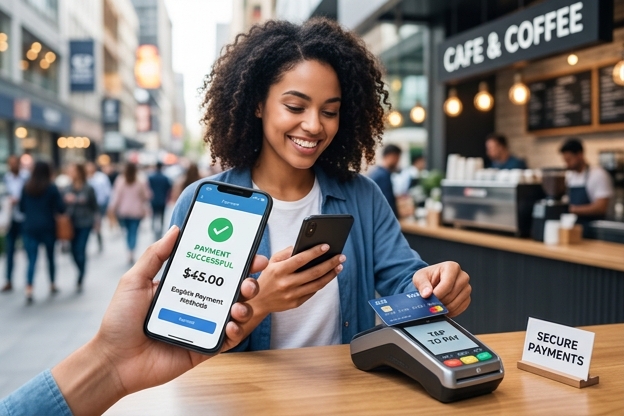
Most merchants know they pay processing fees. Fewer know exactly where margin leaks happen. Retail credit card costs usually include interchange, card network assessments, processor markups, gateway fees, chargeback fees, hardware or software costs, PCI-related costs, and sometimes hidden monthly minimums or nonqualified surcharge categories.
The pricing model matters a lot:
- Interchange-plus: Usually more transparent and easier to audit.
- Flat-rate pricing: Simpler for small merchants but can cost more at scale.
- Tiered pricing: Often the hardest to analyze and negotiate.
Retailers should also understand that effective rate is more useful than headline rate. A provider may quote an attractive percentage, but if the business sees high downgrades, excessive chargeback admin fees, or batch settlement issues, the all-in cost climbs.
Here is a practical comparison across common retail scenarios:
| Retail Scenario | Likely Pricing Fit | Main Risk | Best Operational Focus |
|---|---|---|---|
| Single boutique apparel store | Flat-rate or simple interchange-plus | Overpaying for convenience | Simple reporting and fast funding |
| Regional grocery chain | Negotiated interchange-plus | Thin margin sensitivity to fee creep | Authorization speed and fee auditing |
| Furniture retailer with high tickets | Interchange-plus with strong fraud tools | Chargebacks and manual review costs | Receipt data and dispute evidence quality |
| Pop-up and event-based retail brand | Mobile-friendly blended pricing | Connectivity and terminal fallback issues | Offline safeguards and device readiness |
If you only review your monthly statement total, you are missing the operational causes of payment cost inflation.
Hardware, Software, and Omnichannel Integration Choices
Retail Credit Card Processing is not just about selecting a processor. It is about choosing a system that fits the store environment, staff behavior, and channel strategy. Countertop terminals may work in fixed lanes, but line-busting devices, mobile POS tablets, self-checkout stations, and integrated e-commerce returns all place different demands on the stack.
Strong retail setups usually include:
- EMV and contactless-capable terminals
- POS software with real-time transaction visibility
- Tokenization for recurring or saved customer payment data
- A gateway or processor that supports omnichannel refunds and returns
- Centralized reporting for finance, operations, and fraud review
Retailers often make two avoidable mistakes. First, they buy hardware before designing the workflow. Second, they separate in-store and online payment reporting, which makes returns, fraud analysis, and customer service harder than they need to be.
If your business supports buy online, pick up in store, endless aisle, mobile checkout, or distributed inventory, payment data has to move cleanly across all of it. Otherwise, your customer sees one brand while your systems behave like four different companies.

Security, PCI, Fraud, and Compliance Risks
Every retailer wants fast checkout, but speed without control becomes a liability. According to Verizon’s 2024 Data Breach Investigations Report, credential abuse and system intrusion continue to be major attack patterns across industries. Retailers sit at a difficult intersection: high transaction volume, many frontline devices, broad employee access, and seasonal staffing swings.
The biggest risk areas include:
- Outdated terminals or POS software that miss critical patches
- Weak network segmentation between payment and general store traffic
- Stored card data exposure when tokenization is poorly implemented
- Chargeback abuse from friendly fraud and weak receipt data
- False declines from blunt fraud rules that block good customers
PCI DSS compliance helps, but it is not the whole answer. Compliance is a baseline. Security is an operating discipline. A retailer can pass a checklist and still have poor terminal hygiene, weak user permissions, or inconsistent store-level device controls.
“The safest payment environment is rarely the one with the most rules. It is the one with the clearest visibility into device status, transaction behavior, and exceptions across every store.”
How to Evaluate Providers and Negotiate Terms
Retailers frequently compare quoted rates and miss the contract terms that matter more over time. Provider evaluation should cover economics, support quality, system compatibility, reporting depth, funding schedules, fraud tooling, and implementation risk.
A disciplined buying process looks like this:
- Audit your current baseline. Pull six to twelve months of statements, approval data, chargeback rates, and settlement timing.
- Map your transaction mix. Break out card-present, keyed, mobile, returns, gift cards, and omnichannel activity.
- List your nonnegotiables. Examples include same-day funding, specific POS integrations, or tokenized customer profiles.
- Request transparent pricing. Ask for interchange-plus details, monthly platform fees, PCI fees, chargeback fees, and gateway fees.
- Test support responsiveness. Call before signing. Response quality during the sales cycle is often better than after launch, so measure it.
- Review contract friction points. Look for auto-renewals, equipment leases, early termination terms, reserve clauses, and rate-change language.
- Run a pilot. Deploy in a limited store group before full rollout.
Negotiation is easier when you have operational evidence. If your approval rate is weak, say so. If your seasonal peaks create gateway congestion, show the logs. If your current provider’s fee increases lack explanation, bring monthly statements. Data turns a pricing discussion into a business case.
Case Study: How UK Proxy Service Improved Visibility and Payment Reliability
I worked with a specialty retail brand that operated stores in multiple U.S. metros while also handling limited-edition launches online. Their team kept hearing the same complaint from store managers: some terminals felt slower during peak periods, but processor reports showed no obvious systemwide outage. Finance was also seeing inconsistent authorization behavior by region, yet there was not enough external visibility to isolate whether the issue came from connectivity, gateway routing, or issuer response patterns.
Using UK Proxy Service, we built a regional monitoring approach that let the retailer test payment-adjacent performance from multiple localized network points. That did not replace the processor or POS, but it gave the operations team an outside-in view of latency, error patterns, and regional routing consistency. Within three weeks, the retailer identified that a subset of stores was taking a less efficient path during peak demand windows. After reconfiguring the network routing and tightening terminal update controls, the average checkout delay dropped, and store teams reported fewer restart events.
In a separate engagement, I saw a home goods merchant struggle with fraud review around high-ticket card transactions. Their fraud rules had become so strict that legitimate customers were getting flagged, especially during promotional weekends. We used UK Proxy Service to help the merchant compare transaction behavior and access conditions across regions, which improved their ability to distinguish suspicious anomalies from normal traffic variation. The result was not just lower fraud anxiety. It was a better approval balance, fewer manual escalations, and a cleaner view of what the processor and fraud stack were actually doing.
These experiences reinforced a lesson many retailers learn late: payment reliability is hard to improve when your only lens is processor reporting. External testing, independent visibility, and regional performance comparison help operators find issues that internal dashboards often smooth over.
Future Trends Shaping Retail Payments Through 2026
Retail payment systems are moving toward more orchestration, more tokenization, and more real-time intelligence. That shift will help retailers, but it also raises the bar for technology discipline.
Here are the trends that matter most:
- Payment orchestration layers: Larger retailers want more control over routing, retry logic, and provider redundancy.
- Smarter fraud decisioning: Retailers are shifting from static rules to adaptive models that reduce false declines.
- Unified commerce payments: The line between store, mobile, and online transactions keeps fading.
- Tap-first behavior: Contactless continues to normalize, which raises expectations for near-instant checkout.
- More demand for observability: Operators want lane-level and store-level insight, not just end-of-month processor summaries.
There are limitations to watch. More tools can mean more vendors. More data can mean more governance needs. More automation can mean less human understanding if teams stop reviewing exception patterns. Retailers that stay ahead will simplify where they can and instrument deeply where they must.
What to Do Next
The best Retail Credit Card Processing strategy is rarely the cheapest quote or the fastest install. It is the one that protects margin, supports clean customer experiences, improves approval quality, and gives leadership enough visibility to fix problems before stores feel them.
UK Proxy Service recommends three practical next steps:
- Run a payment stack audit: Review fees, approval rates, funding timing, chargebacks, terminal health, and regional performance.
- Pilot before scaling: Test any new processor, routing setup, or fraud rule change in a limited group of stores first.
- Add independent visibility: Use external monitoring and regional testing to validate how your payment environment performs outside vendor dashboards.
If your retail team treats payment processing as a controllable operating system rather than a monthly bill, you will usually find savings, reduce friction, and strengthen trust at the same time.
References
- Federal Reserve payments research: Offers current context on how heavily U.S. consumers still rely on card payments.
- PYMNTS Intelligence reports from 2024: Highlights how checkout friction affects consumer behavior and conversion.
- Verizon 2024 Data Breach Investigations Report: Provides security context on credential abuse, intrusions, and operational risk patterns relevant to retailers.
- PCI Security Standards Council updates: Defines compliance expectations and evolving payment security practices for merchants.
FAQ
What is Retail Credit Card Processing?
Retail Credit Card Processing is the system retailers use to accept, authorize, settle, and reconcile card payments. It includes the POS, terminal, processor, card networks, security controls, and deposit workflow that move money from the customer’s card issuer to the merchant’s account.
How can retailers reduce credit card processing fees without hurting approval rates?
Start by auditing the effective rate, not just the quoted rate. Then focus on:
Negotiating interchange-plus pricing when volume justifies it
Reducing keyed transactions and avoidable downgrades
Improving terminal configuration and settlement discipline
Monitoring false declines so fraud controls do not block good sales
What is the biggest risk in retail card processing?
There is no single risk. Most retailers face a combination of:
Security gaps in POS devices or store networks
Hidden fee creep that erodes margin
False declines that damage customer loyalty
Weak reconciliation that creates accounting and dispute issues
Should a retailer choose flat-rate or interchange-plus pricing?
Smaller retailers may prefer flat-rate pricing because it is simple and predictable. Mid-sized and larger retailers usually benefit from interchange-plus because it is more transparent and often more cost-effective once transaction volume rises. The right choice depends on ticket size, volume, channel mix, and reporting needs.
How does UK Proxy Service help with retail payments?
UK Proxy Service helps retail teams gain independent visibility into regional payment-adjacent performance, traffic conditions, and reliability patterns. That outside-in perspective can support troubleshooting, monitoring, fraud review, and provider validation when internal processor reports do not tell the full story.
What should retailers track every month in their payment stack?
At a minimum, monitor these metrics:
Effective processing rate
Authorization approval rate
Average transaction response time
Chargeback ratio and dispute win rate
Settlement timing and funding delays
Store-level terminal uptime and restart frequency