

Store Card: What It Is, How It Works, and How to Use It Effectively
Store Card: What It Is, How It Works, and How to Use It Effectively is a question many shoppers only ask after they have already accepted a checkout offer. The pitch usually sounds easy: save 15% today, get special financing, and earn loyalty perks. The problem is that a store card can help your budget in one moment and quietly hurt it the next if you do not understand the rates, limits, and rules attached to it.
At UK Proxy Service, we spend a lot of time analyzing how brands present financial and promotional offers across different regions and customer journeys. That research keeps pointing to the same truth: store cards are not automatically good or bad. They are tools. Used with a plan, they can create savings and credit-building opportunities. Used casually, they can lead to expensive interest charges, lower credit flexibility, and more debt than expected.
A store card is a credit card tied to a specific retailer or retail group. Some can only be used at that store, while others carry a major payment network and work almost anywhere. They often come with promotional discounts, rewards, or financing offers, but they also tend to carry higher interest rates than many general-purpose credit cards.
If you are trying to decide whether a store card belongs in your wallet, the real issue is not the sign-up bonus. It is whether the card fits your buying habits, repayment discipline, and long-term credit strategy.
Table of Contents
- What a store card really is
- How store cards work behind the scenes
- The main types of store cards
- Benefits, trade-offs, and hidden costs
- Store card vs traditional credit card
- How to use a store card effectively
- Common mistakes that cost cardholders money
- A real-world case study from UK Proxy Service
- Who should get a store card and who should pass
What a store card really is
A store card is a revolving credit product designed to increase customer loyalty and spending. Retailers partner with banks or card issuers to offer it at checkout, online, or inside loyalty apps. In return for opening an account, shoppers may receive an instant discount, deferred-interest promotion, exclusive coupons, or points that can be redeemed later.
There are two broad versions:
- Closed-loop store cards, which can only be used at one retailer or a family of related brands
- Open-loop co-branded cards, which carry Visa, Mastercard, or another major network and work at most merchants
The appeal is obvious. Retailers use them to keep customers returning. Issuers use them to earn interest and interchange revenue. Shoppers use them to stretch payments, get introductory savings, or access perks that a standard credit card may not offer at that store.
“A store card should be evaluated as a financing product first and a discount vehicle second. Most consumer regret starts when those priorities get reversed.”
How store cards work behind the scenes
When you apply for a store card, the issuer performs a credit check and decides whether to approve you, what credit limit to assign, and what annual percentage rate to charge. Many store cards are easier to qualify for than premium rewards cards, but that accessibility often comes with lower limits and higher APRs.
Here is what usually happens after approval:
- You receive an immediate signup offer, such as a same-day discount or bonus points.
- Your purchase is added to a revolving balance unless you pay it off by the statement due date.
- Interest begins to matter quickly if you carry a balance, especially after any promotional period ends.
- Your account activity is reported to credit bureaus, which means the card can affect your credit utilization and payment history.
- The retailer continues to market exclusive offers to keep you shopping with them.
According to Federal Reserve data published in 2024, credit card interest rates remained historically elevated for many borrowers. That matters because store cards often sit at the higher end of the APR range. A discount you gain at signup can disappear fast if the balance rolls over for several months.
The main types of store cards
Not all store cards behave the same way. The details can change how useful or risky the account becomes.
Closed-loop retail cards
These are limited-use cards accepted only by one retailer or a related retail family. They commonly offer targeted coupons, birthday rewards, or member-only sale access. They can make sense for a shopper who buys essentials from the same store every month, but they are less flexible than general-purpose cards.
Open-loop co-branded cards
These cards carry a payment network and can be used beyond the retailer. They still reward spending most strongly at the sponsoring brand, but they work more like mainstream credit cards. For frequent travelers, gas buyers, or loyal department-store customers, this can be the more practical version.
Deferred-interest promotional cards
Some store cards push large purchases with phrases like “no interest if paid in full within 12 months.” This sounds simple, but the wording matters. Deferred interest is not the same as a 0% APR promotion. If you fail to pay the full amount by the deadline, interest may be charged retroactively from the purchase date.
The Consumer Financial Protection Bureau has repeatedly warned consumers to read promotional financing terms carefully, especially where deferred-interest language is involved. This is one of the most misunderstood features in retail credit.
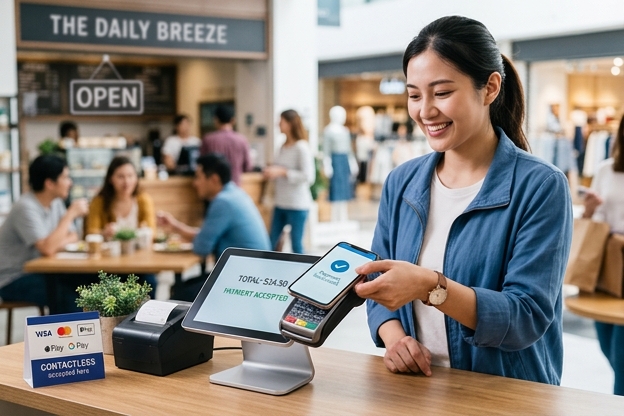
Benefits, trade-offs, and hidden costs
A store card can be smart in the right setting. It can also become an expensive habit if used emotionally instead of strategically.
Where store cards can help
- Immediate savings: Many cards offer 10% to 25% off the first purchase.
- Ongoing rewards: Loyal customers may earn points, statement credits, or exclusive product access.
- Credit-building potential: Responsible use can add positive payment history to your credit file.
- Special financing: Useful for planned purchases like furniture, appliances, or home improvement items.
- Stackable value: In some cases, cardholder offers can be combined with seasonal promotions or loyalty rewards.
Where they can hurt
- High APRs: Carrying a balance can erase rewards quickly.
- Low credit limits: A modest purchase can spike your credit utilization ratio.
- Overspending pressure: Retail discounts can encourage unnecessary purchases.
- Deferred-interest traps: Missing the full payoff deadline can trigger large charges.
- Account clutter: Too many niche cards can make your finances harder to manage.
Experian’s 2024 consumer credit analysis continued to show that utilization and on-time payments remain central factors in credit health. That is important with store cards because their lower limits mean even a few hundred dollars can push the account to a high utilization percentage. A $700 balance on a card with a $1,000 limit does not look harmless to scoring models.
Store card vs traditional credit card
If you are comparing options, it helps to look at business reality rather than marketing language.
| Card Type | Best For | Typical Reward Angle | Biggest Drawback |
|---|---|---|---|
| Closed-loop apparel store card | Frequent shoppers at one clothing brand | First-order discount, loyalty points, sale access | Limited usability and often high APR |
| Furniture financing store card | Planned large purchases with payoff schedule | Deferred-interest promotions | Retroactive interest if terms are missed |
| Co-branded department store Visa or Mastercard | Shoppers who want flexibility beyond one retailer | Enhanced rewards at the sponsor brand, standard use elsewhere | Rewards may still underperform top cash-back cards |
| General cash-back credit card | Most everyday consumers | Broad spending rewards across categories | May not include retailer-specific discounts |
For many households, a general cash-back card is the cleaner all-purpose option. A store card works best when your spending is concentrated, your payoff habits are strong, and the perks are materially better than what you already get elsewhere.
How to use a store card effectively
The best store card strategy is simple: treat it like a savings tool, not extra income.
Use it for planned spending only
If the purchase was not already in your budget, the discount can become an expensive excuse. Store cards are most effective when tied to repeat essentials, scheduled replacement purchases, or a one-time big-ticket item you have already planned.
Pay attention to utilization
Because store card limits can be modest, your score can react faster than expected. Try to keep balances low relative to the limit, and consider paying before the statement closes if you made a larger purchase.
Read promotional financing terms line by line
Look for the exact words used: “0% APR,” “deferred interest,” “minimum monthly payment,” and “paid in full by.” Those phrases are not interchangeable. One missed detail can change the total cost of the purchase dramatically.
Match the card to one spending lane
Give the card a clear job. For example, use it only for household supplies, only for children’s clothing, or only for store-specific business purchases. That makes spending easier to track and reduces impulse use.
“The right store card can be useful, but only when the cardholder knows the exit plan before the purchase is made.”
Common mistakes that cost cardholders money
Most store card problems come from a small set of repeat mistakes.
- Applying for a card just because a cashier asks at checkout
- Focusing on the signup discount but ignoring the APR
- Carrying a balance after a small one-time purchase
- Using the card too heavily relative to its limit
- Forgetting about annual account activity and letting the card go stale
- Mixing up 0% APR promotions with deferred-interest offers
I have seen consumers save $40 upfront and then spend far more in interest over the next six months because the card stayed in their wallet without a repayment plan. That pattern is common enough that it should shape how you evaluate every retail credit offer.
A real-world case study from UK Proxy Service
At UK Proxy Service, I worked with a retail research team that needed to compare store card offers shown to customers in different U.S. markets. The objective was not to issue credit ourselves. It was to verify how promotional terms, checkout messaging, and disclosure language changed by location, traffic source, and device. We built a structured monitoring workflow to view those offers consistently and flag where the marketing language was clear versus where it pushed urgency harder than transparency.
What stood out was how often the same promotion felt safer or riskier based on the wording around it. In one apparel campaign, the top-line benefit was highlighted everywhere, but the high APR details required much more effort to find on some pages than others. That experience reinforced a practical lesson I now give readers: if the value proposition is obvious in five seconds but the repayment terms take five minutes, slow down. A store card should never be accepted on headline savings alone.
In a second project, I reviewed home-goods financing offers with the team and tracked how promotional countdowns affected shopper behavior. We saw that deferred-interest language triggered the most confusion when paired with monthly payment examples that looked affordable but did not clearly emphasize the full payoff deadline. That project made me more conservative about recommending store financing unless the purchase is necessary, the repayment schedule is mapped out, and the consumer can absorb the entire balance before the deadline without strain.
Who should get a store card and who should pass
Good candidates for a store card
A store card can make sense if you shop regularly with one retailer, pay balances in full, and understand the reward structure well enough to get repeat value from it. It may also fit someone rebuilding credit, provided the spending is small and managed carefully.
People who should think twice
If you already carry credit card debt, struggle with impulse shopping, or need broad payment flexibility, a store card is usually not the best next move. A simple low-interest card or a strong flat-rate cash-back card often creates fewer problems and more usable value.
Questions to ask before applying
Ask yourself the following:
- Would I shop here this often without the card?
- Can I pay the full balance by the due date or promotional deadline?
- Are the rewards meaningfully better than my current credit card?
- Will this new account make my overall credit profile stronger or messier?
According to the National Retail Federation’s 2024 consumer trend reporting, value-driven shopping remains a dominant behavior. That helps explain why store cards continue to sell well. But value is not just the sticker discount. Real value is the total financial result after fees, interest, and credit impact are counted.
Final take and next actions
A store card can be useful when it matches your habits, serves a narrow purpose, and gets paid off on time. It becomes dangerous when the instant discount distracts you from the long-term cost. The smartest way to judge one is to compare the full package: where it works, what it rewards, how expensive it becomes if carried, and whether it improves or complicates your credit profile.
UK Proxy Service recommends three next actions before you apply for any store card:
- Check the terms first: Review APR, promo conditions, and whether interest is deferred or truly 0%.
- Run the payoff math: Calculate exactly how much you need to pay each month to avoid interest or finish before the promotion ends.
- Compare against one general-purpose card: If a flat-rate cash-back card gives similar value with more flexibility, the store card may not be worth the extra account.
References
- Federal Reserve, 2024 consumer credit and interest rate data: Provided context on the elevated borrowing environment and why APR sensitivity matters.
- Consumer Financial Protection Bureau, 2023-2025 consumer guidance on promotional financing: Helped clarify deferred-interest risks and disclosure issues.
- Experian, 2024 consumer credit reporting insights: Reinforced the importance of utilization and payment history for store card users.
- National Retail Federation, 2024 consumer trend reporting: Supported the broader point that shoppers continue to prioritize visible value and loyalty offers.
FAQ
Is a store card the same as a regular credit card?
Not exactly. A store card is a type of credit card, but many are tied to one retailer or retail group. Some can be used only at that merchant, while others are co-branded and work anywhere the card network is accepted.
Does a store card hurt your credit score?
It can help or hurt depending on how you use it. The application may cause a small temporary dip because of a hard inquiry, and a low credit limit can raise utilization quickly. On the other hand, on-time payments and low balances can support stronger credit over time.
What should I check before accepting a store card offer at checkout?
Look at the terms before the discount. Pay special attention to:
The APR after any introductory period
Whether financing is true 0% APR or deferred interest
Your ability to pay the balance quickly
How often you realistically shop at that retailer
Store Card: What It Is, How It Works, and How to Use It Effectively — what is the short answer?
A store card is retailer-linked credit that can offer discounts, rewards, or financing. It works best when used for planned purchases and paid off on time. It works poorly when used for impulse spending or when balances are carried at a high APR.
Are store cards worth keeping after the signup discount?
Sometimes, yes. Keep it if the ongoing rewards are valuable, the account has no annual fee, and you can manage it without overspending. If the card adds clutter and little real value, closing it or leaving it unused may be the better call after reviewing any credit impact.