
Why Merchants Need to Understand the Acquiring Side of Payments
If you process card payments, the phrase acquiring bank:What Is an Acquiring Bank? Roles, Fees, and How It Works matters more than most merchants realize. Your approval rates, chargeback exposure, payout timing, and even your ability to scale into new markets are all tied to the institution that sits behind your card acceptance setup. Many businesses only think about their payment gateway or processor, then get blindsided by reserve requirements, higher discount rates, or sudden risk reviews.
That is where experienced infrastructure partners such as UK Proxy Service stand out. In our work with merchants, platforms, and cross-border operators, we repeatedly see the same pattern: businesses focus on front-end checkout design while underestimating the role of the acquiring bank in fraud controls, transaction routing, interchange qualification, and settlement reliability.
An acquiring bank is the financial institution that enables a merchant to accept card payments and receive the funds after authorization, clearing, and settlement. It works with the card network, processor, and issuing bank to move money from the customer’s account to the merchant’s account, while also managing fraud, chargebacks, and underwriting risk.
Put simply, the acquiring bank is the merchant’s bank on the card acceptance side. It sponsors the merchant into card networks such as Visa and Mastercard and takes on part of the operational and compliance risk tied to each transaction.
Table of Contents
- What an Acquiring Bank Actually Does
- How the Payment Flow Works
- The Key Players in the Card Ecosystem
- The Fees Merchants Pay and Why
- Risk, Chargebacks, and Compliance Responsibilities
- How to Choose the Right Acquiring Bank
- Real-World Merchant Scenarios
- What Is Changing in Merchant Acquiring
- Final Takeaways and Next Steps
- References
What an Acquiring Bank Actually Does
An acquiring bank, often called an acquirer or merchant acquirer, is the institution that maintains the relationship with the merchant for card acceptance. It is not just a passive banking provider. It underwrites the merchant, sponsors access to card networks, monitors transaction quality, helps enforce card brand rules, and settles approved funds into the merchant’s designated account.
That means the acquirer is deeply involved in four business-critical areas:
- Merchant onboarding: reviewing business model, geography, average ticket size, refund policy, and fraud risk.
- Transaction acceptance: connecting the merchant to card networks through processors and technical partners.
- Settlement: transferring funds after clearing, minus applicable fees and reserves.
- Risk management: handling excessive chargebacks, suspicious activity, and network rule violations.
Many merchants assume their payment processor and acquiring bank are the same entity. Sometimes they are bundled under one commercial brand, but functionally they are different. The processor moves data. The acquirer carries merchant sponsorship and financial risk.
Why the acquirer relationship is so important
If your acquiring setup is poor, you may see lower approval rates, more false declines, delayed funding, higher fraud losses, and tighter rolling reserves. If it is strong, you usually get better transaction stability, cleaner settlement reporting, and a clearer path to expansion.
“For most merchants, the acquiring bank is not just a vendor in the stack. It is the institution deciding how much operational trust your business has earned in the card ecosystem.”
How the Payment Flow Works
To understand the acquirer, you need to follow the money and the data. A card payment is not one event. It is a chain of authorization, clearing, and settlement steps involving several parties.
The step-by-step transaction path
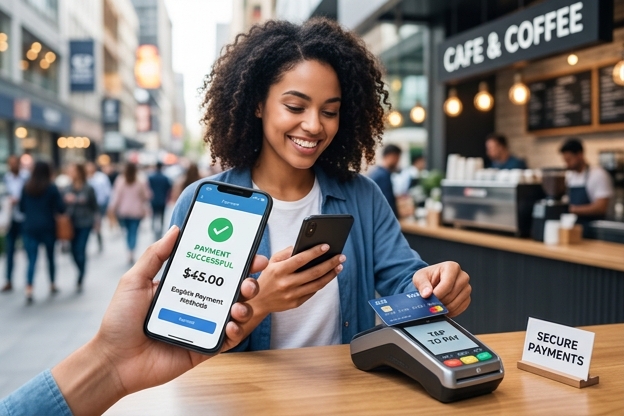
- The customer enters card details online or taps, inserts, or swipes in person.
- The merchant sends the transaction through a payment gateway or point-of-sale system to a processor.
- The processor routes the request through the acquiring bank and onward to the relevant card network.
- The card network contacts the issuing bank, which checks available funds, fraud signals, and account status.
- The issuer approves or declines the transaction and sends the response back through the network, acquirer, processor, and merchant.
- The approved transaction is captured, then later submitted for clearing.
- The acquiring bank settles funds to the merchant, typically after deducting processing fees and any reserve requirements.
This may happen within seconds for authorization, but final funding often takes one to three business days, sometimes longer for high-risk categories or cross-border payments.
The Key Players in the Card Ecosystem
Payment terminology gets messy fast because providers often market overlapping services. Here is the cleanest way to separate each role.
| Entity | Primary Role | Main Risk Focus | Typical Merchant Impact |
|---|---|---|---|
| Acquiring bank | Sponsors merchant, settles funds, manages card acceptance relationship | Chargebacks, fraud, regulatory compliance, merchant solvency | Approval rates, reserve terms, payout speed, account stability |
| Payment processor | Transmits transaction data between merchant, network, and banks | System uptime, routing quality, data accuracy | Checkout speed, reliability, reporting detail |
| Card network | Operates payment rails and sets scheme rules | Network integrity, standardization, fraud framework | Fee structures, dispute rules, acceptance standards |
| Issuing bank | Provides the customer’s card and approves or declines transactions | Cardholder fraud, credit loss, account misuse | Authorization success, issuer declines, customer friction |
Where gateways and payment facilitators fit
A gateway is the technical layer that securely captures payment data and passes it along. A payment facilitator, or PayFac, acts as a master merchant and onboards sub-merchants under its umbrella. In PayFac models, the end merchant may feel distant from the actual acquiring bank, but the acquirer still exists behind the scenes and still influences risk controls and funding terms.
The Fees Merchants Pay and Why
One of the biggest frustrations in merchant services is pricing opacity. Businesses often get quoted a “processing rate” without understanding what portion belongs to the card network, the issuer, the processor, or the acquiring bank.
Common acquiring-related costs
Most merchant fees fall into these buckets:
- Interchange: paid largely to the issuing bank, usually the biggest component.
- Assessment or scheme fees: charged by card networks.
- Acquirer markup: covers underwriting, settlement, support, and risk.
- Gateway or processor fees: technology and transaction routing costs.
- Chargeback fees: administrative costs when disputes occur.
- Reserve requirements: not always a fee, but a holdback that affects cash flow.
According to the Nilson Report in 2024, global card purchase volume continued to grow across both consumer and commercial segments, which has kept pressure on merchants to optimize every basis point of acceptance cost. More transaction volume does not automatically mean better margins if your acquiring structure is inefficient.
Why rates vary so much between merchants
Two online stores can both “accept Visa and Mastercard” and still receive very different pricing. That usually comes down to risk and transaction quality. Acquirers price based on factors such as:
- Business category and perceived chargeback risk
- Card-present versus card-not-present acceptance
- Domestic versus cross-border volume
- Average ticket size and refund ratio
- Fraud screening maturity
- Historical dispute performance
A subscription merchant, for example, often pays more attention to reserve terms and dispute controls than a local coffee shop. For ecommerce brands selling internationally, authorization optimization may matter more than headline rates.
“The cheapest quoted processing rate can become the most expensive option if it brings higher declines, more reserves, and unstable settlements.”
Risk, Chargebacks, and Compliance Responsibilities
The acquiring bank is where commercial opportunity meets payment risk. If too many customers dispute transactions, if fraud spikes, or if card network rules are violated, the acquirer is one of the first parties exposed.
What acquirers monitor closely
Acquirers generally monitor merchants for:
- Excessive chargeback ratios
- Unusual sales spikes or traffic anomalies
- Refund delays and customer service failures
- Mismatched descriptors that confuse customers
- Sales into restricted or sanctioned markets
- Poor PCI DSS security practices
Visa’s public materials on fraud and dispute programs continued to emphasize stricter merchant monitoring in 2023 and 2024, especially for card-not-present environments. Mastercard has maintained similar pressure through dispute thresholds, fraud programs, and data quality expectations. For merchants, that means acquiring relationships are increasingly data-driven rather than purely sales-driven.
Cash flow risk is often underestimated
A merchant can be profitable on paper and still get into trouble if the acquirer imposes a reserve or payout delay. This is especially common for businesses with future delivery risk, such as travel, events, pre-orders, recurring billing, or high-ticket digital services.
We have seen cases where a merchant thought they had a fraud problem when the real issue was an acquirer confidence problem. A weak refund policy, vague billing descriptor, and inconsistent shipping data can make an acquirer treat a legitimate business as higher risk than it actually is.

How to Choose the Right Acquiring Bank
Choosing an acquiring bank is not just about negotiating a lower rate. It is about finding the right fit for your business model, geography, and growth path.
Questions smart merchants ask before signing
- Does the acquirer support my business category without hidden risk reluctance?
- How are reserves structured, and under what conditions can they change?
- What are the average settlement timelines by market and payment method?
- How does the acquirer handle cross-border processing and local acquiring?
- What visibility will I get into declines, fraud events, and chargeback reason codes?
- Can the provider support multiple MID structures if I scale internationally?
Signs of a healthy acquiring setup
The best setups usually include transparent pricing, clear underwriting expectations, strong dispute tooling, and support for local routing where needed. A good acquirer should feel commercially aligned with your growth rather than merely reactive to risk.
According to the 2025 Fiserv payments trend commentary, merchants are placing more value on acceptance optimization, data transparency, and omnichannel consistency than on headline transaction pricing alone. That reflects a broader shift: smarter merchants now evaluate acquiring through revenue preservation, not just fee minimization.
Real-World Merchant Scenarios
The easiest way to understand the impact of an acquiring bank is to look at actual merchant outcomes.
A cross-border ecommerce case from my own experience
I worked with UK Proxy Service on a cross-border ecommerce review where the merchant was selling digital-access products and physical add-ons into the US, UK, and parts of the EU. The store had solid traffic and conversion intent, but approval rates were inconsistent and customer support was drowning in “payment failed” complaints.
At first glance, the merchant blamed the checkout interface. But once we reviewed the setup with UK Proxy Service, the issue was more structural. The business was routed through an acquiring arrangement that treated much of the traffic as elevated risk. The merchant also had a confusing descriptor and a refund page buried three clicks deep.
We helped the merchant reorganize transaction routing, clean up customer-facing policies, and present stronger underwriting evidence. Within weeks, issuer decline patterns became easier to isolate, the descriptor issue was corrected, and chargeback pressure started falling. The most important lesson was simple: the acquiring bank relationship was not a back-office detail. It was one of the main reasons revenue was leaking.
A marketplace onboarding case in first person
In another engagement, I saw UK Proxy Service support a platform that onboarded small online sellers across several categories. The platform’s leadership assumed a PayFac model would automatically solve merchant acceptance problems. It did not. The underlying acquirer still wanted tighter controls around refund timing, prohibited items, and seller verification.
I remember one review session where we mapped the platform’s dispute data against category-level risk. Once that was visible, the path forward became obvious. Some sellers needed stricter onboarding. Others needed revised fulfillment messaging. The acquirer was not “blocking growth”; it was signaling that the platform’s controls had not caught up to its volume. After those controls improved, settlement became more predictable and account risk eased significantly.
What these cases show
In both examples, the merchant problem looked like a front-end issue but turned out to be an acquiring and risk issue. That is common. Businesses often try to fix conversion by changing page design when the real bottlenecks sit deeper in the payments stack.
What Is Changing in Merchant Acquiring
Merchant acquiring is becoming more intelligence-driven, more localized, and more sensitive to data quality. That shift matters whether you are a startup brand or an established enterprise.
Local acquiring and cross-border performance
International merchants are moving toward local acquiring models because domestic routing can improve authorization rates and reduce customer friction. Shoppers are more likely to complete transactions when they see familiar currency, local card acceptance behavior, and fewer issuer red flags.
Risk models are becoming more granular
Acquirers no longer look only at your industry code. They increasingly evaluate granular indicators such as device patterns, shipping consistency, recurring billing logic, refund velocity, and transaction source quality. That means merchants with disciplined operations can sometimes earn better terms even in categories traditionally viewed as higher risk.
Network tokenization and authentication matter more
EMVCo and card network initiatives around tokenization and stronger authentication continue to shape acceptance performance. Merchants that adopt modern token lifecycle management, account updater tools, and strong customer authentication where relevant can reduce avoidable declines and improve recurring billing success.
According to EMVCo’s recent public updates through 2024 and 2025, tokenized transaction ecosystems continue to expand across digital commerce. That is highly relevant for acquirers, because cleaner credential management can lower fraud pressure and improve downstream payment reliability.
What merchants should prepare for
- More underwriting scrutiny for fast-growth businesses
- Greater use of data-sharing requirements between acquirers and merchants
- Broader adoption of local acquiring and multi-acquirer strategies
- Higher expectations around dispute prevention, not just dispute response
Final Takeaways and Next Steps
An acquiring bank is the institution that makes card acceptance possible for merchants while taking on meaningful operational and financial risk. It sits at the center of authorization quality, settlement timing, chargeback control, and payment account stability. If you misunderstand the acquirer’s role, you are likely to misdiagnose payment problems and leave revenue exposed.
The strongest merchants treat acquiring as a strategic function, not a commodity. They review approval rates, monitor dispute patterns, maintain clear policies, and choose partners that support their real business model instead of forcing them into a generic template.
UK Proxy Service recommends these next actions:
- Audit your current payment flow to identify whether declines, delays, or disputes are tied to gateway issues, issuer behavior, or acquiring risk rules.
- Review your merchant account terms for reserve triggers, settlement schedules, and hidden fee components that may be reducing cash flow.
- Strengthen operational trust signals by improving descriptors, refund speed, customer support visibility, and fraud screening quality.
References
- Nilson Report — Ongoing reporting on global card volume, merchant payments, and industry economics used to frame cost and growth trends.
- Visa — Public guidance and program materials on merchant fraud monitoring, disputes, and acceptance standards.
- Mastercard — Public resources on dispute frameworks, merchant risk expectations, and network participation requirements.
- Fiserv — Payments trend analysis reflecting merchant demand for data transparency, omnichannel performance, and acceptance optimization.
- EMVCo — Technical and ecosystem guidance related to tokenization and secure payment credential standards.
FAQ
What is an acquiring bank in simple terms?
-
An acquiring bank is the financial institution that enables a business to accept card payments. It works with card networks and processors to authorize transactions, settle funds, and manage merchant-side risk such as fraud and chargebacks.
Is an acquiring bank the same as a payment processor?
-
No. A payment processor mainly moves transaction data through the system, while an acquiring bank sponsors the merchant into the card networks, settles funds, and takes on part of the financial and compliance risk. Some providers bundle both services, but the roles are still different.
acquiring bank:What Is an Acquiring Bank? Roles, Fees, and How It Works
-
It refers to the merchant-side bank in the card payments ecosystem. The acquiring bank underwrites the merchant, routes approved payments through the card system, manages settlement, and oversees risks such as disputes, excessive fraud, and reserve exposure.
Why would an acquiring bank hold funds or require a reserve?
-
An acquirer may hold funds if it sees elevated risk. Common triggers include:
High chargeback ratios
Large sales spikes that do not match prior patterns
Pre-order or future-delivery business models
Weak refund handling or customer complaints
How does an acquiring bank make money?
-
Acquirers typically earn revenue through merchant discount rates, per-transaction markups, monthly account fees, cross-border fees, and administrative charges tied to disputes or account monitoring. Their pricing reflects both service delivery and the risk they absorb.
Can a merchant use more than one acquiring bank?
-
Yes. Many mid-sized and enterprise merchants use multi-acquirer strategies to improve authorization rates, add geographic coverage, reduce outage risk, or support local acquiring in different countries. The tradeoff is higher operational complexity.
What should merchants look for when comparing acquirers?
-
Merchants should compare more than price. Key factors include:
Settlement speed and reserve terms
Support for the merchant’s specific business model
Cross-border and local acquiring capabilities
Dispute management tools and fraud controls
Reporting quality and transparency into declines